Coinbase CEO Envisions Crypto Super App to Rival Banks


Armstrong pushes vision of full-service platform with payments, credit cards, and Bitcoin rewards
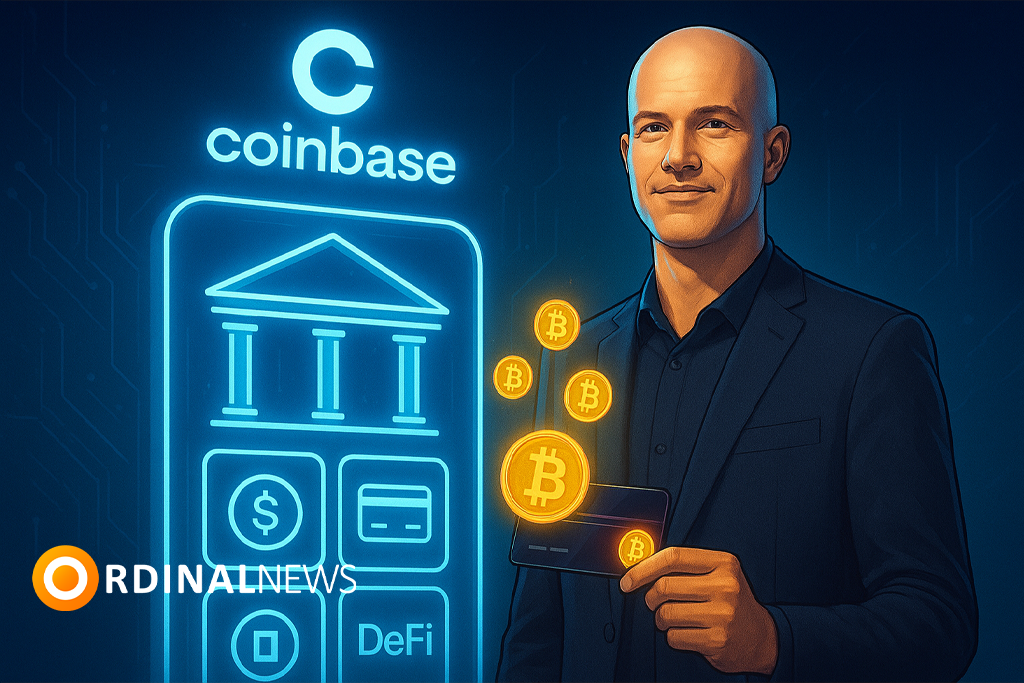
Coinbase CEO Brian Armstrong has unveiled plans to transform Coinbase into a crypto-powered “super app” designed to replace traditional banks. Speaking in a recent Fox Business interview, Armstrong outlined ambitions for the exchange to become a one-stop shop for payments, credit cards, and financial rewards.
“Yes, we do want to become a super app and provide all types of financial services,” Armstrong said. “We want to become people’s primary financial account and I think that crypto has a right to do that.”
Armstrong criticized the inefficiencies of the current banking system, highlighting high credit card fees as a major problem. “It boggles my mind. Why are we paying two to three percent every time we swipe a card? It’s just bits of data flowing over the internet. It should be free or close to it,” he said.
Credit card with Bitcoin rewards in the pipeline
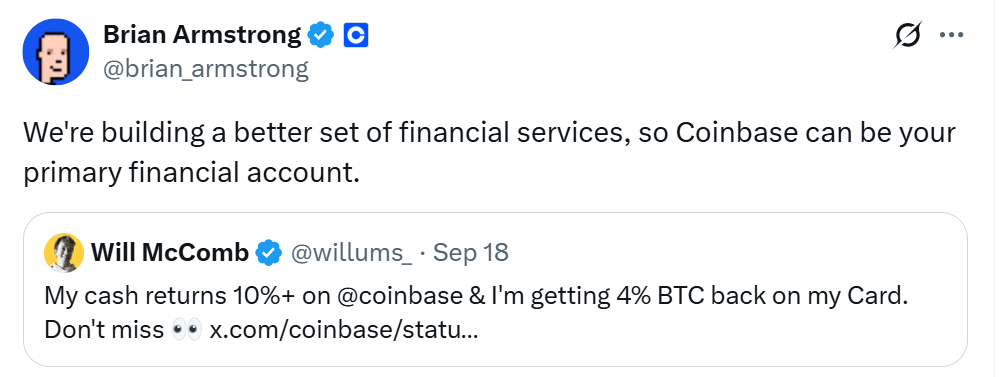
Armstrong revealed that Coinbase aims to roll out a credit card offering up to 4% Bitcoin rewards, underscoring the company’s long-term vision of acting as a bank replacement.
The move comes as the US makes progress toward clearer crypto regulations, with Armstrong praising legislative developments such as the GENIUS Act and the Senate’s advancement of market structure reforms.
“We’ve partnered with banks like JPMorgan and PNC,” Armstrong noted, “but we’d rather see them operate on a level playing field with every other company.”
DeFi integration set to enhance USDC yields
Coinbase has also begun integrating DeFi tools directly into its platform, most recently through a partnership with decentralized lending protocol Morpho. The feature enables users to lend USDC within the Coinbase app and potentially earn yields of up to 10.8%.
The rollout arrives as lawmakers scrutinize yield-bearing stablecoins. Bank advocacy groups have urged regulators to tighten restrictions, but Coinbase has defended stablecoins as a modern alternative to outdated banking revenue models rather than a systemic risk.