Canaan Stock Soars 26% After Landmark 50,000 Bitcoin Mining Rig Deal



U.S. Firm Orders Canaan’s Latest Avalon A15 Pro Rigs
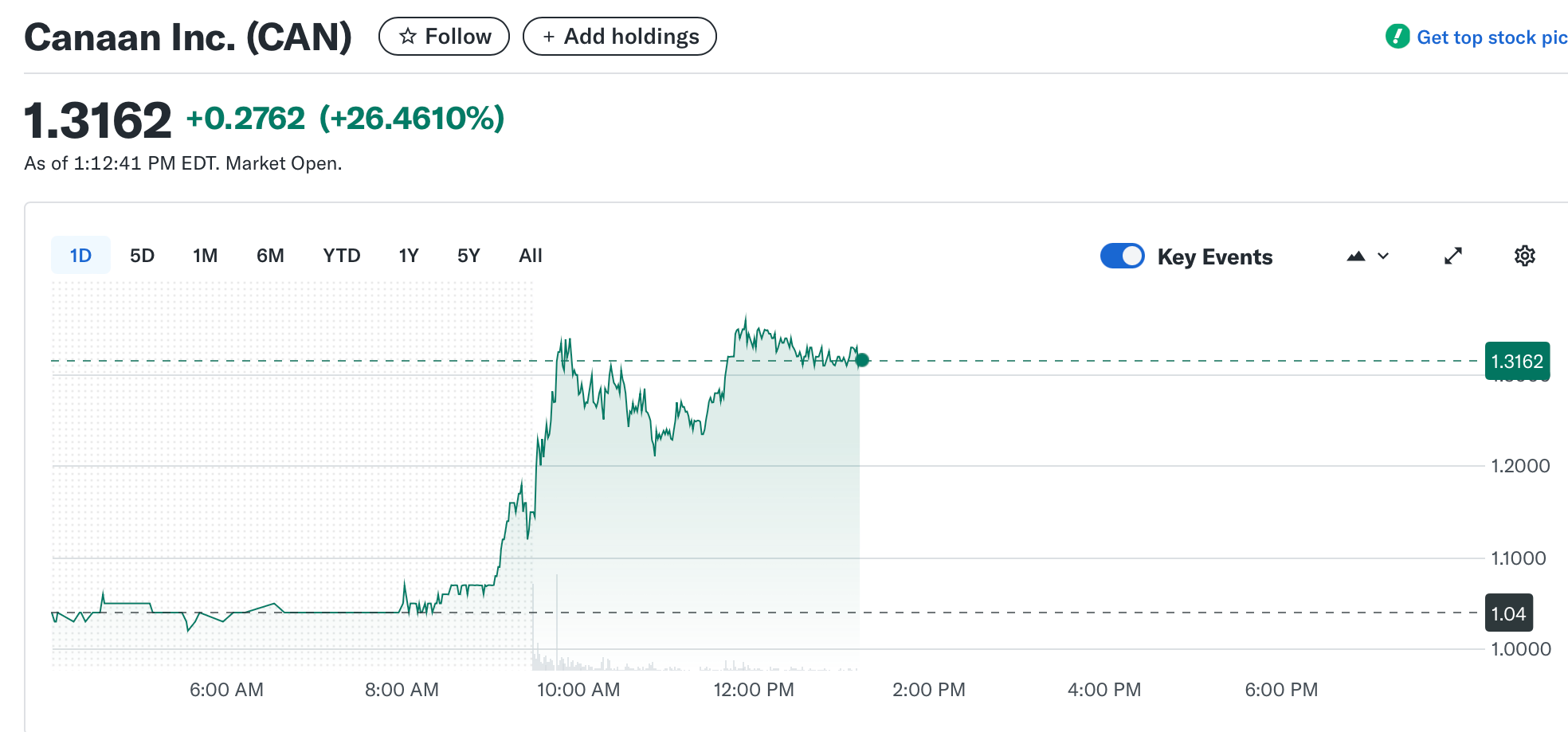
Canaan Inc. (NASDAQ: CAN), one of the world’s leading Bitcoin mining hardware manufacturers, saw its stock surge over 26% in early trading on Thursday after announcing its largest equipment sale in more than three years.
A U.S.-based institutional buyer placed an order for 50,000 Avalon A15 Pro mining machines, the company’s most advanced rigs designed for large-scale Bitcoin mining operations. While the buyer remains undisclosed, Canaan confirmed that the deal marks a significant milestone in its expansion into the U.S. market.
Canaan’s CEO, Nangeng Zhang, said the transaction underscores both firms’ confidence in the long-term future of Bitcoin mining and highlights growing demand for high-efficiency blockchain infrastructure.
At the time of writing, Canaan shares were up 26.4% at $1.31 on Nasdaq, according to Yahoo Finance. The stock has climbed more than 50% over the past six months, despite being down about 40% year-to-date.
U.S. Remains the Global Bitcoin Mining Leader
The United States continues to dominate the global Bitcoin mining landscape, accounting for 36% of worldwide hashrate, according to Hashrate Index. Hashrate represents the total computing power securing the Bitcoin network and is a key measure of mining strength.
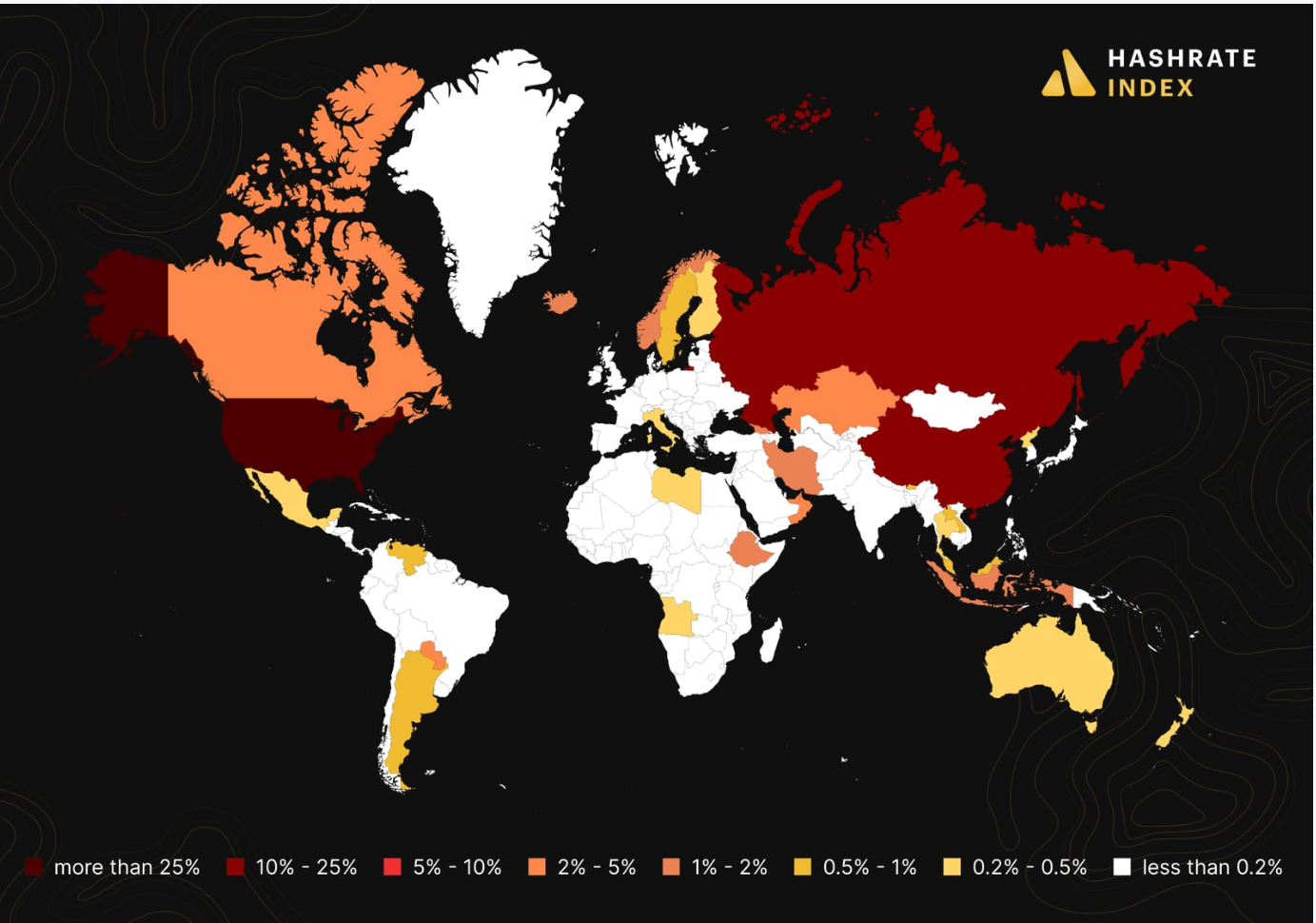
This strong U.S. presence aligns with the growing institutional appetite for Bitcoin mining infrastructure, despite rising costs and challenges.
The Current State of Bitcoin Mining
Bitcoin mining secures the blockchain by validating transactions and adding new blocks, rewarding miners with newly minted Bitcoin. However, the process becomes more difficult and expensive over time, as the network automatically adjusts mining difficulty every two weeks and halves block rewards approximately every four years.
In 2025, Bitcoin mining difficulty reached record highs:
- 127.6 trillion in August
- 134.7 trillion on Sept. 5
- 150.84 trillion as of this week
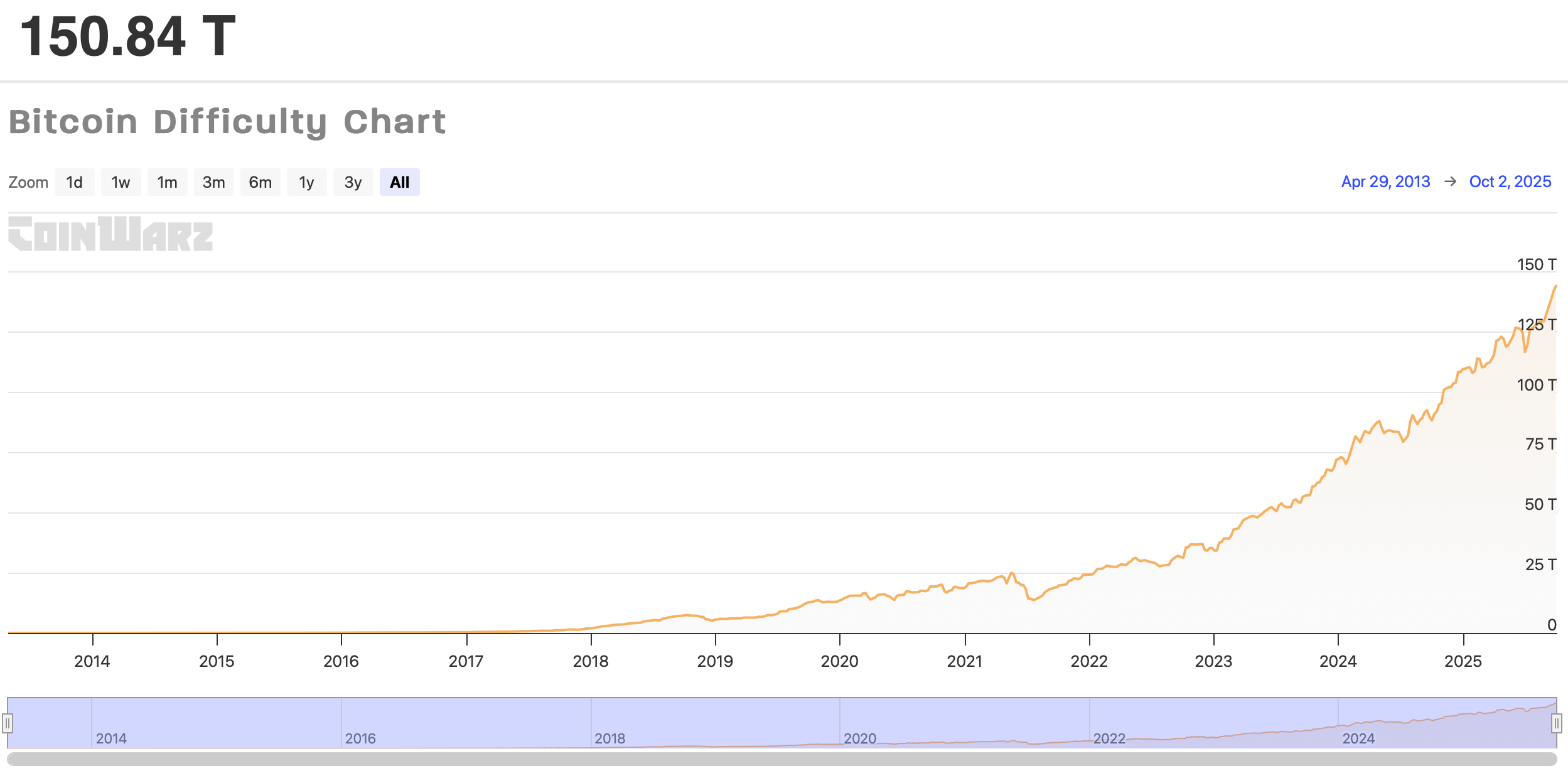
These surging difficulty levels make it increasingly costly to mine Bitcoin profitably.
Industry Challenges and Shifting Strategies
The intensifying difficulty has forced several miners to exit the industry. In June 2025, Bit Digital announced it would shut down its Bitcoin mining operations and pivot toward an Ethereum treasury strategy, citing unsustainable conditions.
CEO Sam Tabar even predicted that the “Bitcoin mining industry is going to be dead in two years,” arguing that another halving event could render mining unprofitable for most players.
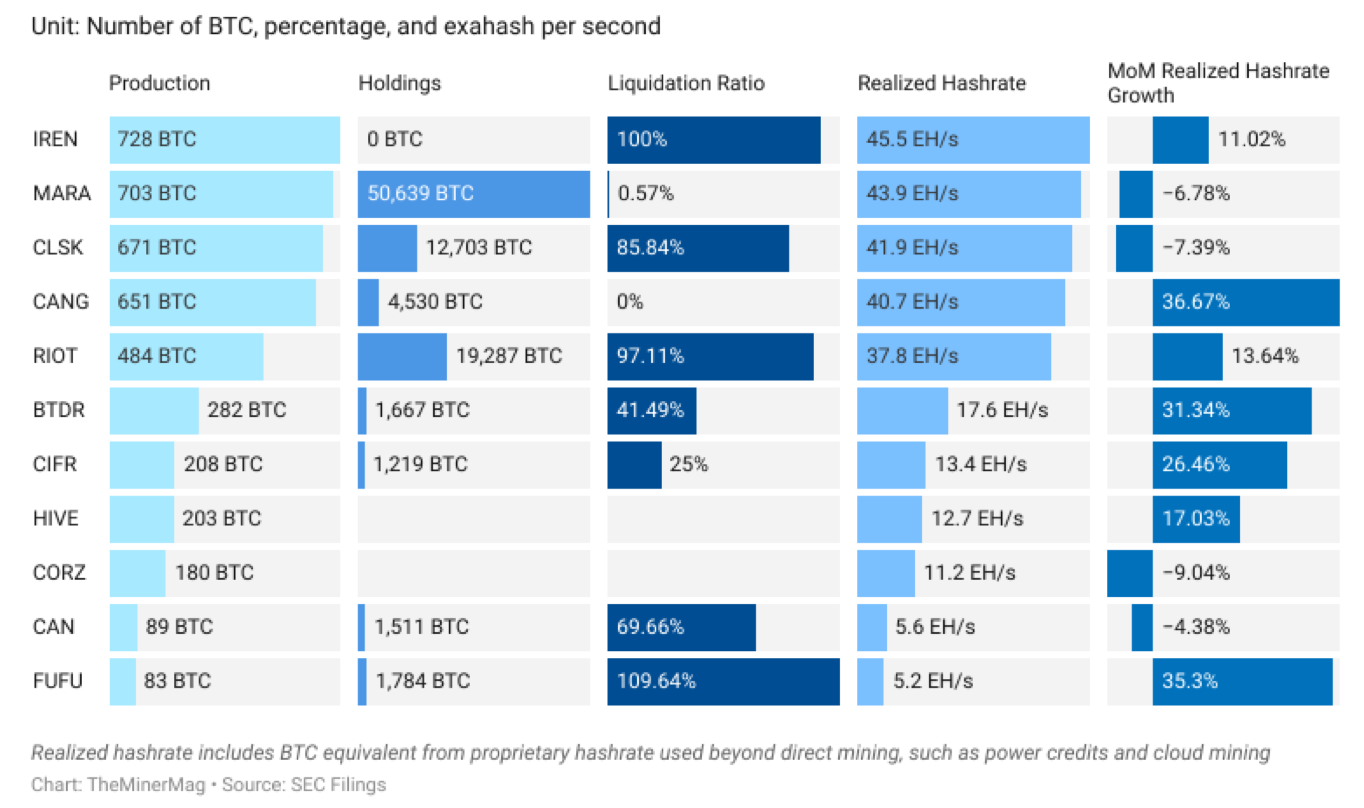
Meanwhile, large-scale institutional miners continue to consolidate power. A report from The Miner Mag revealed that the four biggest publicly traded miners – Marathon Digital (MARA), Iris Energy (IREN), Cango, and CleanSpark – controlled over 19% of block rewards in July 2025.
Solo Miners Still Defy the Odds
Despite industry centralization, smaller independent miners occasionally strike gold. On July 3, 2025, a solo miner successfully mined block 903,883, earning nearly $350,000 in rewards and transaction fees.
Weeks later, another solo miner secured block 907,283, collecting over $373,000 based on Bitcoin’s price at the time – a reminder that even in an increasingly institutional market, individual miners still have opportunities.
Conclusion
Canaan’s landmark 50,000-rig order signals a renewed appetite for Bitcoin mining in the U.S., even as difficulty levels and energy costs continue to pressure the industry. With both institutional dominance and occasional solo mining successes, the sector remains a battleground between scale and resilience.